

Understand your learner
The best curriculum isn't the one with the highest ratings. It's the one that best fits the child using it.
A different question
Most reviews ask
Is this curriculum good?
A question that produces star ratings and best-seller lists, but rarely tells you whether it will work for the child in front of you.
We ask instead
Who is this curriculum a good fit for?
Every review on The Thoughtful Homeschool is written to answer exactly this — using the same three-lens framework, every time.
The framework at a glance
How a Learning Profile comes together
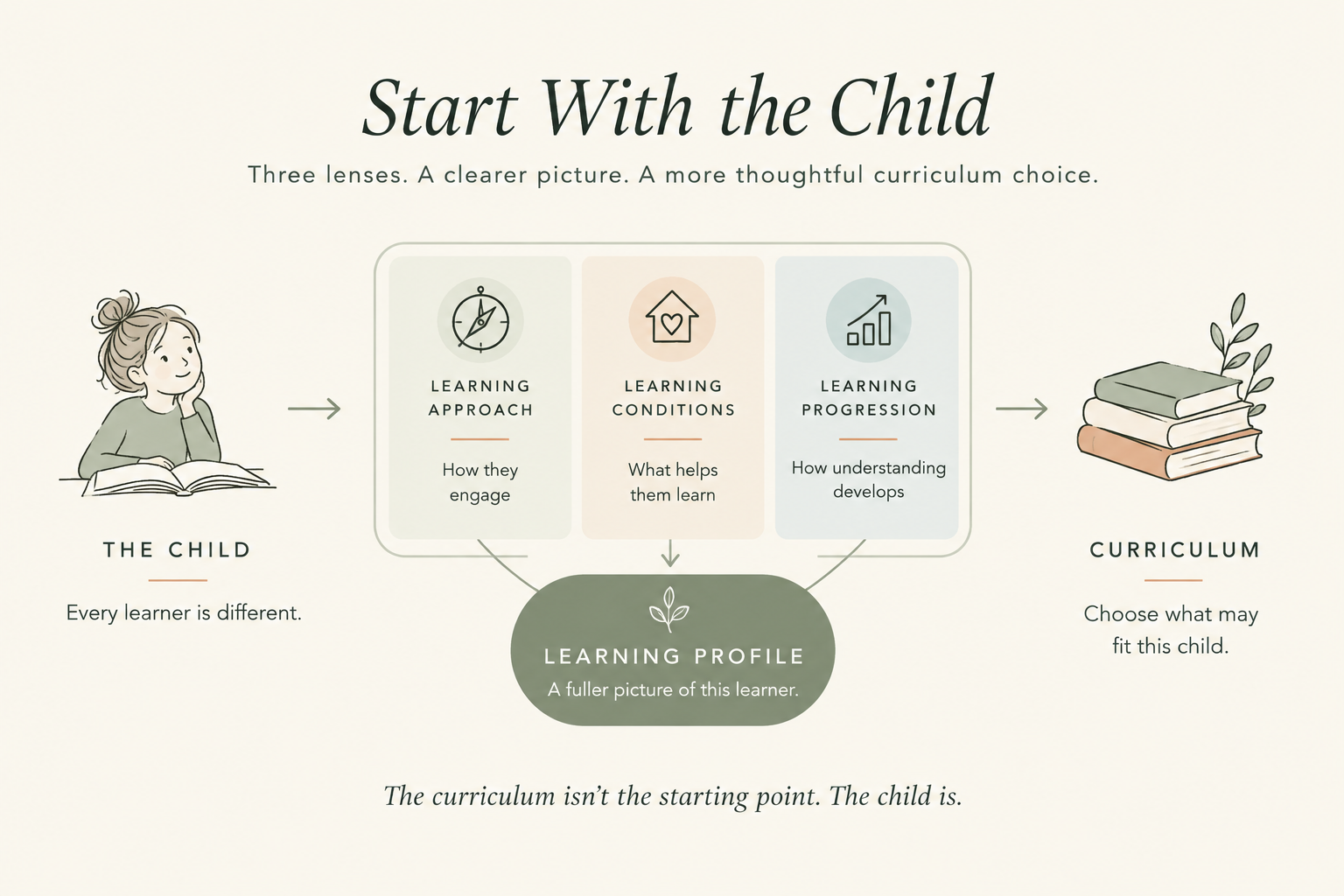
One learner, three lenses
The three lenses
No single lens tells the whole story. Each one captures a different dimension of the same child — and it's only together that a clear picture emerges.
Lens 01
Learning Approaches
How does your child naturally engage with new learning?
Some children ask questions before anything else. Some wrestle with a problem until it clicks. Some pause and think. Some need to talk it through. The posture your child takes with new material is the fastest way to explain why one curriculum feels effortless and another feels like a fight.
Explore the four approaches
Lens 02
Learning Conditions
What environment helps your child actually learn?
The same lesson lands differently in different conditions. Some children need quiet and predictability. Some need movement and variety. Some need to feel a sense of ownership over what they're doing. Curriculum design carries assumptions about all of this — even when it doesn't say so out loud.
Explore the four conditions
Lens 03
Learning Progression
How does your child build understanding over time?
Some children need to master one idea before moving on. Some need to circle back through the same idea in new ways. Some do best with a hybrid rhythm. Curriculum has a flow baked into it — and when it matches your child, learning starts to feel like it's building instead of resetting.
Explore the three progressions
Together, they form one Learning Profile.
How your child engages, the conditions that help them, and the way understanding builds — three views of the same learner, considered as one.
The journey
How The Thoughtful Homeschool works
Learn what makes your child unique.
Start with the three lenses that shape how children engage with learning.
Discover your child's Learning Profile.
Take the quiz to surface the patterns most present in how your child learns.
Explore curriculum through a new lens.
Every review on this site is evaluated using the same learner-first framework.
Choose with greater confidence.
Stop asking “what’s the best curriculum?” Start asking “what’s the best fit for my child?”
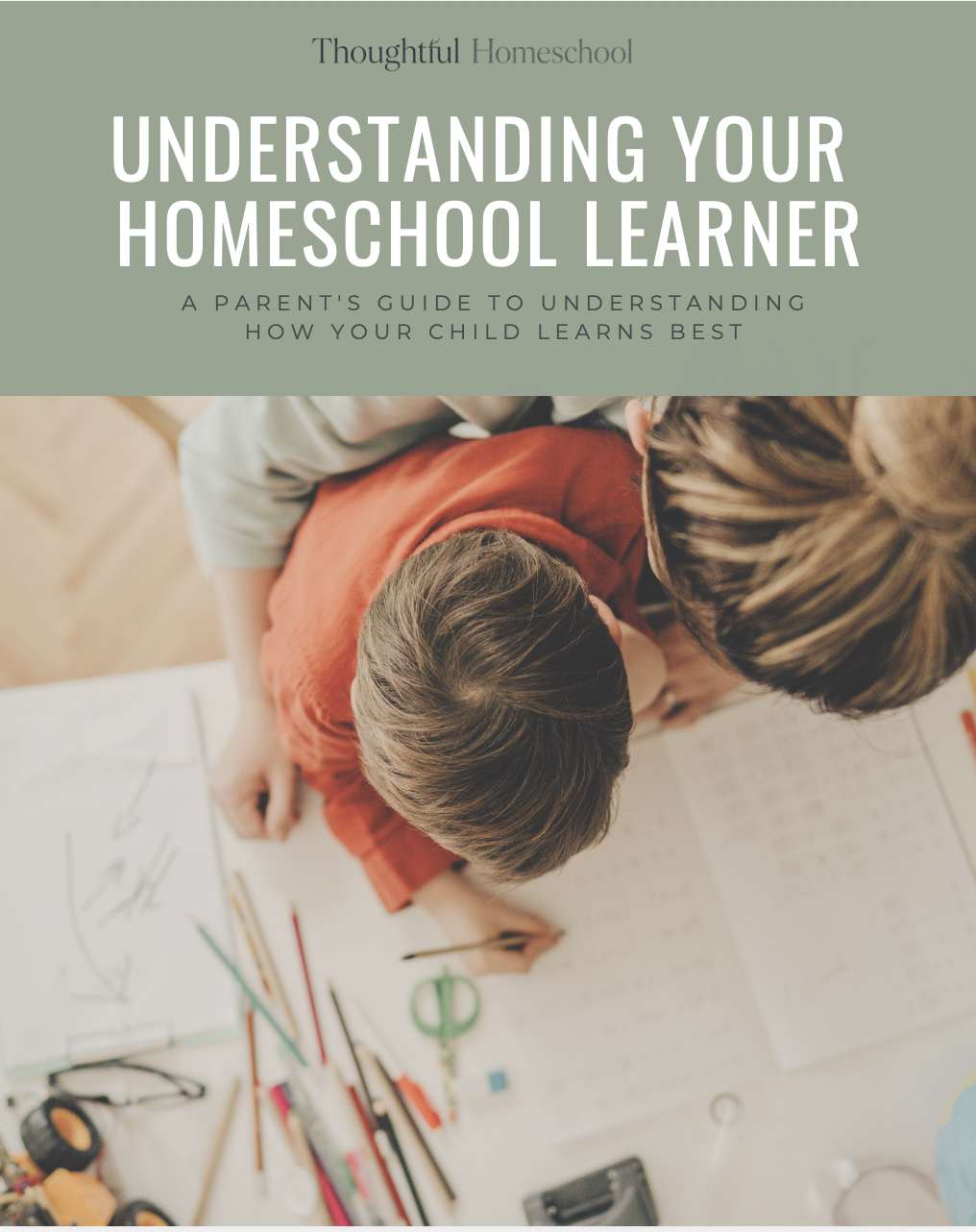
Free · Chapter One
Read the opening chapter of the book this site is built on.
Understanding Your Homeschool Learner is the long-form home for the framework behind every page here. Start with Chapter One, free.
Ready to begin?
Understanding your learner is the first step.
The Learning Profile Quiz surfaces the patterns that make your child unique — in about two minutes.