

Math-U-See
An excellent choice for families seeking a hands-on, mastery-based math curriculum that removes calendar pressure and teaches through visual manipulatives, video-modeled instruction, and honest teach-back verification.
View course breakdown
- Grade range
- Primer – Calculus (non-grade-based, K–12 span)
- Format
- Parent-led, video-assisted elementary-through-calculus math with a proprietary manipulative system, structured worksheets, and mastery-gated pacing.
- What's included
- Instruction Manual; Student Workbook/Practice pages; Integer Block manipulative set; required lesson videos; optional Lesson Tests; online Placement Tool.
- Consumable
- Varies
- Role
- Core
- Daily time
- 10–45 minutes
Quick decision
In a sentence
It centers on a proprietary color-coded Integer Block system used continuously from Primer through Algebra 1, paired with required instructor-training videos and a "teach it back" mastery gate — a self-paced, non-grade-correlated structure rather than a scripted, calendar-paced daily lesson.
A great fit if
Children and families who tend to thrive here.
- Families whose child learns best by touching, building, and seeing math before working abstractly, and parents who want a video teacher walking them through each new concept before they explain it themselves.
Think twice if
Where it may take more adjusting.
- Families who prefer full-color, visually varied workbooks, a traditional spiral review structure, grade-level correlation with school-based programs, or a fully screen-free teaching approach.
Ready to try it?
Find Math-U-See on Amazon.
Affiliate Disclosure: This page contains affiliate links. If you purchase through these links, The Thoughtful Homeschool may earn a commission at no additional cost to you. Full disclosure
Parent Experience
What day-to-day actually looks like
How much work this is for you, how independent your child can be, and what a week feels like.
At a glance
Your day with this program
Daily time
10–45 min
Prep
Moderate
Parent at the table
Moderate
Course Structure
—
Prep required
How much do I do before the lesson?
Instructor must watch lesson video and review Instruction Manual before each new lesson.
Parent involvement
How much am I at the table?
You teach or check in for part of each lesson.
Student independence
How much can my child carry?
Some sections your child can do solo once introduced.
Daily workload
How much of the day does this take?
Approximately 10-45 minutes depending on level.
Cognitive demand
How hard is the thinking?
Challenging enough to stretch without overwhelming.
Hands-on level
How much making and doing?
Regular hands-on work is central to the lessons.
Flexibility
Can we bend it to our week?
Easy to speed up, slow down, or rearrange.
Screen time
How much happens on a device?
Required lesson video at every level (not optional).
A Typical Day
What a lesson feels like
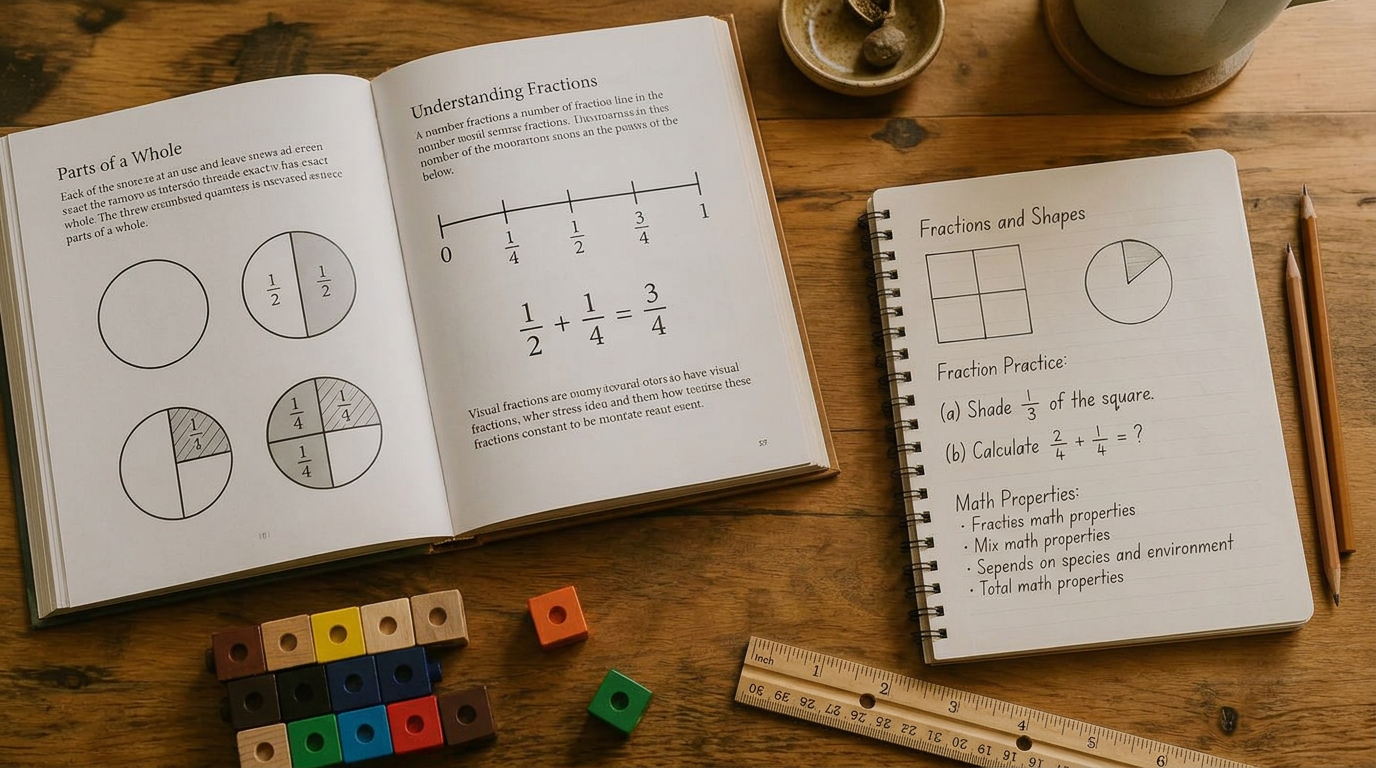
An instructor previews each lesson's video and manual, then presents the new concept with the student using Build-Write-Say and manipulatives; the student practices with decreasing support, demonstrates mastery by teaching the concept back, and only then advances into cumulative Systematic Review.
A rhythm, not a checklist
10–45 min a day- 1
Read
Read or listen to the assigned lesson together.
Core - 2
Watch
Video-Modeled Instruction
Core - 3
Practice
Independent Practice
Core - 4
Record
Build-Write-Say
Core
Most families move through the core steps and dip into enrichment when there's room — not every activity happens every day.
Learner fit
Fit at a glance
Who tends to thrive here, seen through all three lenses. Tap any lens to see more.
Learning Approach
Best for Persistent Solver & Reflective Thinker
See more
- Persistent SolverExcellent fit
The entire structure is built around progressive, one-skill-at-a-time mastery with repeated practice (Lesson Practice A/B/C) and systematic cumulative review b…
- Reflective ThinkerGood fit
Upper-level Instruction Manuals are written directly to the student, who reads the material and works more independently, and even at lower levels the 'teach i…
- Collaborative LearnerGood fit
The core presentation step is a one-on-one, instructor-to-student demonstration and dialogue built around Build, Write, Say, and mastery is explicitly confirme…
- Curious ExplorerPossible fit
The program includes real-world word problems and application/enrichment pages, and Demme has described building on everyday examples (a belt for circumference…
Learning Conditions
Thrives with Safety & Structure
See more
- SafetyExcellent fit
Untimed, mastery-gated progression and Greek-letter (rather than grade-level) labeling explicitly remove calendar pressure and the fear of being 'behind,' lett…
- StructureExcellent fit
The Four-Step Approach (Preparation, Presenting, Practice, Progression) and a defined weekly lesson rhythm give every lesson a consistent, predictable shape.
- OwnershipGood fit
Mastery-gated pacing lets the student determine, through demonstrated understanding rather than a calendar, when they're ready to move on, though presentation…
- Movement & VarietyGood fit
The color-coded Integer Block system provides sustained, high hands-on engagement through Algebra 1, but daily activity structure (video, build-write-say, work…
Learning Progression
Mastery
Skills build one at a time; each is secured before moving on.
Fit is about match, not quality — Math-U-See can work well with the right supports.
Alternatives
If you like Math-U-See, also consider

Beast Academy
Concepts and problems are presented through an ongoing comic-book narrative with recurring monster characters who model mathematical discussion and s…

Dimensions Math® PK–5
It centers on the Concrete-Pictorial-Abstract (CPA) instructional method with required core manipulatives, tiered Basics/Practice/Challenge workbook…

Math Mammoth Light Blue Series
Explanations, visual models, and mental math strategies live in the student book, so many children can learn largely from the page, while the parent…
Go deeper
The full breakdown
Full editorial review
Overall Match
Math-U-See is built like a tutor who comes to your house on video, teaches you the concept first, and then steps back so you can teach your child with a set of hands-on blocks until the lightbulb goes on. There's no clock ticking toward a grade level here — levels are named with Greek letters instead of grades specifically so a child can spend exactly as long as they need on a concept, without the pressure of being "behind."
Best Fit
This is a strong match if your child learns best by touching, building, and seeing math before they're asked to do it abstractly on paper — the color-coded block system stays in use all the way through Algebra 1. It also works well for parents who'd like a video teacher walking them through each new concept before they have to explain it themselves.
Families Often Appreciate
- The video lessons "teach the teacher," so you don't need to already understand every math concept cold before you teach it
- Progress is based on your child's actual mastery, not a school calendar — Greek-letter levels mean no one has to feel "behind"
- The same set of manipulative blocks carries all the way from first counting through algebra, so concepts visually connect across years
- The "teach it back to me" check is a simple, honest way to know your child really gets it, not just that they got lucky on a worksheet
- A free online Placement Tool and free first-three-lessons preview make it easy to try before buying and to place a child accurately from the start
Consider Another Option If
- Your family prefers workbooks with color, illustration, and visual variety — Math-U-See's books are printed in black and white, a deliberate, no-frills design choice
- You'd rather your child move through daily cumulative review of many topics rather than focus deeply on one concept at a time
- You want the curriculum's sequence to line up neatly with public-school grade levels
- You'd rather assemble your own low-cost household manipulative kit than invest in a dedicated proprietary block system
THS Learner Analysis
How Your Child Learns
Curious Explorer
Possible fitThe program includes real-world word problems and application/enrichment pages, and Demme has described building on everyday examples (a belt for circumference, ceiling tiles for area), but the core lesson path is a fixed sequence of one instructor-led concept at a time with a defined manipulative demonstration, rather than open-ended, student-directed investigation.
Reflective Thinker
Good fitUpper-level Instruction Manuals are written directly to the student, who reads the material and works more independently, and even at lower levels the 'teach it back' requirement asks the student to independently organize and articulate their own explanation of a concept rather than simply completing a worksheet.
Collaborative Learner
Good fitThe core presentation step is a one-on-one, instructor-to-student demonstration and dialogue built around Build, Write, Say, and mastery is explicitly confirmed through the student explaining the concept back to the instructor — a sustained two-person verbal exchange, though it is not group/peer collaboration.
Persistent Solver
Excellent fitThe entire structure is built around progressive, one-skill-at-a-time mastery with repeated practice (Lesson Practice A/B/C) and systematic cumulative review before advancing — precisely the incremental-difficulty, practice-heavy structure this profile thrives with.
Learning Environment
Safety
Excellent fitUntimed, mastery-gated progression and Greek-letter (rather than grade-level) labeling explicitly remove calendar pressure and the fear of being 'behind,' letting a student take exactly as long as they need on any concept.
Structure
Excellent fitThe Four-Step Approach (Preparation, Presenting, Practice, Progression) and a defined weekly lesson rhythm give every lesson a consistent, predictable shape.
Ownership
Good fitMastery-gated pacing lets the student determine, through demonstrated understanding rather than a calendar, when they're ready to move on, though presentation of new concepts remains instructor- and video-led, especially in lower levels.
Movement & Variety
Good fitThe color-coded Integer Block system provides sustained, high hands-on engagement through Algebra 1, but daily activity structure (video, build-write-say, worksheet practice) is consistent rather than varied in type.
How Skills Build Over Time
One idea at a time, taught until it's solid before moving on.
Concepts are taught one at a time to full mastery — confirmed via a "teach it back" check — before Systematic Review cumulatively revisits prior material; the program explicitly states it is "not a spiral approach."
Research & evidence
Frequently asked questions
FAQs for this curriculum are coming soon. Have a specific question? Send it in.
Related articles
The articles library goes live soon. In the meantime, read about the framework this review uses.
Not sure yet?
Take the 2-minute Learning Profile Quiz
See how Math-U-See — and thirty other curricula — rank against your child's profile.
Start the quiz →Looking for another curriculum? Suggest one for us to review.