

Math Mammoth Light Blue Series
A low-prep, mastery-oriented math program for Kindergarten through Grade 8 where the explanations are in the student book. It rewards children who can read and work on their own and parents who are comfortable setting the pace, and it pairs best with placement testing if your child is coming from an easier program.
View course breakdown
- Grade range
- Kindergarten through Grade 8 (Light Blue Series)
- Format
- PDF downloads; printed editions are also sold through retailers (Tier 3). Families may print for their own students.
- What's included
- Consumable worktexts (A and B per grade), plus answer keys, chapter tests, and cumulative reviews; a free worksheet maker and online practice.
- Consumable
- Varies
- Role
- Core
Quick decision
In a sentence
Explanations, visual models, and mental math strategies live in the student book, so many children can learn largely from the page, while the parent paces and checks rather than teaches from a script.
A great fit if
Children and families who tend to thrive here.
- Families who want a conceptual, mastery-style math program a child can largely study from the page, and who are comfortable setting the pace and choosing which exercises to assign.
Think twice if
Where it may take more adjusting.
- Families who want a scripted open-and-go program, heavy hands-on or game-based learning, built-in daily spiral review, or high school courses from the same publisher.
Ready to try it?
Find Math Mammoth Light Blue Series on Amazon.
Affiliate Disclosure: This page contains affiliate links. If you purchase through these links, The Thoughtful Homeschool may earn a commission at no additional cost to you. Full disclosure
Parent Experience
What day-to-day actually looks like
How much work this is for you, how independent your child can be, and what a week feels like.

At a glance
Your day with this program
Daily time
Varies
Prep
Low
Parent at the table
Moderate
Course Structure
—
Prep required
How much do I do before the lesson?
No scripted lessons; chapter introductions supply notes; printing needed.
Parent involvement
How much am I at the table?
High at Kindergarten; lower from Grade 1 up; parent paces and checks.
Student independence
How much can my child carry?
For readers; the books are written to the student.
Daily workload
How much of the day does this take?
Publisher guidance runs from 15 to 75 minutes a day by grade.
Cognitive demand
How hard is the thinking?
Small steps but demanding; the publisher says many popular programs are easier. Estimate.
Hands-on level
How much making and doing?
Visual models and written work dominate; manipulatives are optional beyond early grades.
Flexibility
Can we bend it to our week?
Half-assignments, flexible chapter order, mixable levels, parent-set pacing.
Screen time
How much happens on a device?
Printed or on-screen worktexts; optional videos and online practice.
A Typical Day
What a lesson feels like
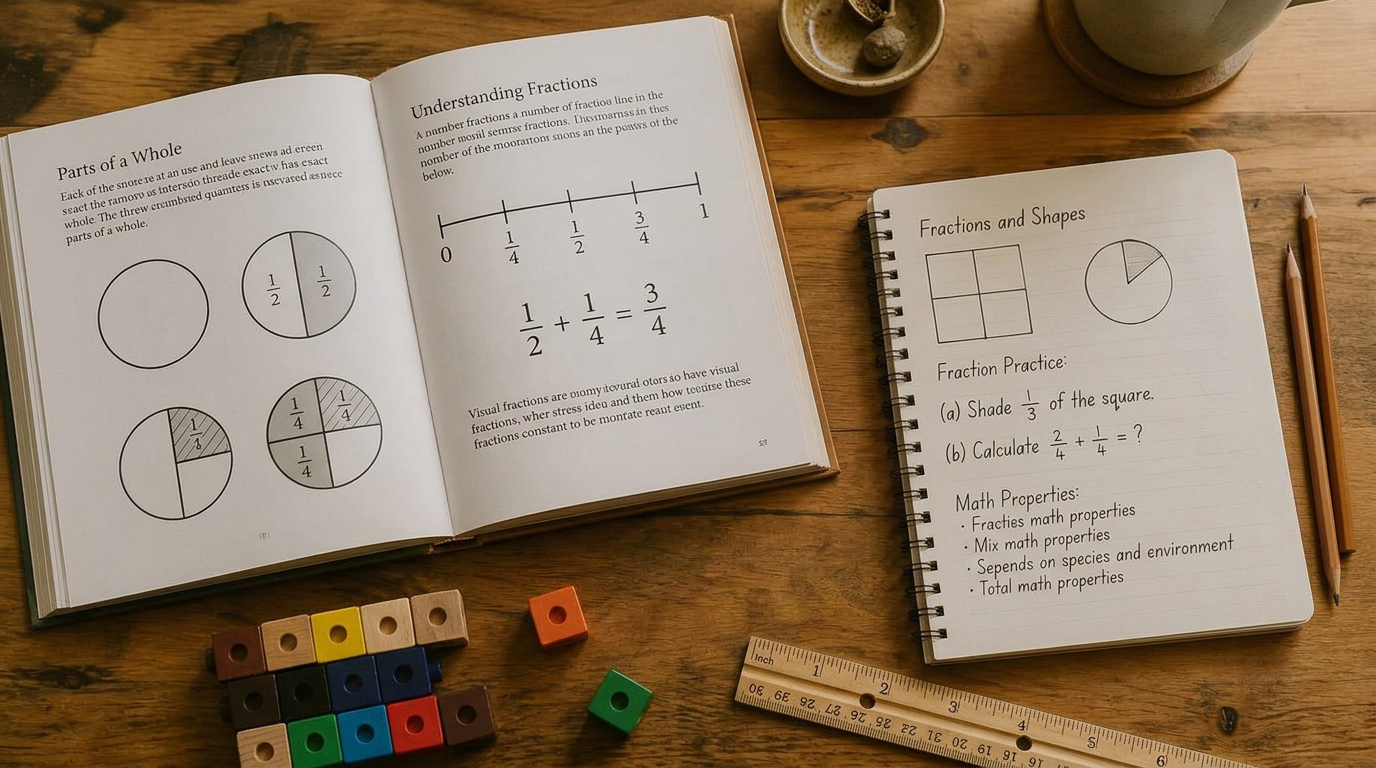
The child reads the lesson explanation and examples in the worktext, completes the exercises and word problems (often about half of a long set), tries optional Puzzle Corner challenges, and finishes each chapter with a mixed review and optional test.
A rhythm, not a checklist
- 1
Read
Read or listen to the assigned lesson together.
Core - 2
Practice
Multi-Step Word Problems From Grade 2
Core - 3
Record
Optional Videos (Grades 1–7), Online Practice, And A Free Worksheet Maker
Optional - 4
Explore
Parent-Led, Activity-Based Lessons In Kindergarten
Core
Most families move through the core steps and dip into enrichment when there's room — not every activity happens every day.
Learner fit
Fit at a glance
Who tends to thrive here, seen through all three lenses. Tap any lens to see more.
Learning Approach
Best for Persistent Solver & Reflective Thinker
See more
- Persistent SolverGood fit
Mastery chapters with ample practice, structured fact drill, mixed and cumulative reviews, and multi-step word problems give real practice and review, but conc…
- Reflective ThinkerGood fit
The worktext speaks directly to the student and is described as nearly self-teaching, making independent reading and solo problem-solving central, though expla…
- Curious ExplorerPossible fit
Puzzle Corners, pattern exercises, and optional games offer occasional open-ended moments, but the core path is a fixed chapter sequence.
- Collaborative LearnerPossible fit
Kindergarten is parent-led and chapter introductions suggest games to play together, but the core design is independent worktext study.
Learning Conditions
Thrives with Safety & Structure
See more
- SafetyGood fit
The publisher discourages timed tests and percentage grading, makes tests optional, and paces by mastery, but levels are grade-labeled and pacing guidance foll…
- StructureGood fit
Consistent worktext pages, chapter organization, and chapter introductions give clear shape, but the publisher states it has not scripted what to do or when, s…
- OwnershipGood fit
Self-teaching worktexts and stay-until-understood pacing let readiness drive progress, with optional Puzzle Corners and flexible assignment, though the parent…
- Movement & VarietyPossible fit
Daily work is mostly written worktext pages; games, videos, online practice, and Kindergarten activities add variety but as optional or early-grade extras.
Learning Progression
Mastery
Skills build one at a time; each is secured before moving on.
Fit is about match, not quality — Math Mammoth Light Blue Series can work well with the right supports.
Alternatives
If you like Math Mammoth Light Blue Series, also consider

Beast Academy
Concepts and problems are presented through an ongoing comic-book narrative with recurring monster characters who model mathematical discussion and s…

Dimensions Math® PK–5
It centers on the Concrete-Pictorial-Abstract (CPA) instructional method with required core manipulatives, tiered Basics/Practice/Challenge workbook…
Math with Confidence
It pairs a fully scripted, video-free Instructor Guide with a low-cost household Math Kit rather than a proprietary manipulative system, and explicit…
Go deeper
The full breakdown
Full editorial review
Overall match. Math Mammoth is a mastery-oriented, concept-first math program built from consumable worktexts, two per grade, from Kindergarten through Grade 8. The explanations sit in the student pages, so many children can read, work, and learn with little parent teaching. It leans on visual models, mental math strategies, and word problems (multi-step from Grade 2), and it asks the parent to set the pace rather than follow a script. It is low in prep and low in cost, and it suits families who want depth without a teacher-led routine.
Best fit. Families who want a conceptual, mastery-style math program that a child can largely study from the page; who are comfortable setting the pace and choosing which exercises to assign; and who want one consistent program from Kindergarten through pre-algebra.
Families often appreciate
- Clear explanations in the student worktext, so children can learn from the page (publisher FAQ).
- Visual models and mental math strategies that build understanding of why procedures work, not just how.
- Word problems throughout, with multi-step problems from Grade 2, and recurring "Puzzle Corner" challenges.
- Freedom to assign about half of a long exercise set, skip around, and slow down, with chapters designed so topics can be revisited (the Grade 6 listing says chapters can be studied out of order).
- Free placement tests, free videos for Grades 1–7, a free worksheet maker, and online practice.
- Low cost and continuity from Kindergarten through Grade 8.
Consider another option if
- You want a scripted, open-and-go program where the parent teaches each lesson from a manual. The publisher states it has not spelled out exactly what to do, when, or how.
- Your child learns best through heavy hands-on work or games. The worktext pages are mostly written, with games and manipulatives as optional extras.
- You want built-in, tight daily spiral review. The publisher describes a mastery-oriented design with some spiraling across grades, and offers separate review workbooks.
- Your child is easily overwhelmed by dense, text-heavy pages. The pages are busy; the publisher gives tips for pacing and assigning fewer problems.
- You need high school math from the same publisher. The line ends at Grade 8.
Something to Consider. Many popular programs are less demanding than Math Mammoth, so families coming from another curriculum often go through an adjustment period, especially with multi-step word problems from Grade 2. The publisher's placement tests and its advice to start a level lower, rather than too high, make the transition smoother. Plan to use them rather than placing by grade alone.
THS Learner Analysis
How Your Child Learns
Curious Explorer
Possible fitPuzzle Corners, pattern exercises, and optional games offer occasional open-ended moments, but the core path is a fixed chapter sequence.
Persistent Solver
Good fitMastery chapters with ample practice, structured fact drill, mixed and cumulative reviews, and multi-step word problems give real practice and review, but conceptual understanding is the central design choice and the publisher avoids a tight spiral and encourages assigning only part of long sets.
Reflective Thinker
Good fitThe worktext speaks directly to the student and is described as nearly self-teaching, making independent reading and solo problem-solving central, though explain-back or written-reasoning checkpoints are not built in.
Collaborative Learner
Possible fitKindergarten is parent-led and chapter introductions suggest games to play together, but the core design is independent worktext study.
Learning Environment
Safety
Good fitThe publisher discourages timed tests and percentage grading, makes tests optional, and paces by mastery, but levels are grade-labeled and pacing guidance follows a school year.
Structure
Good fitConsistent worktext pages, chapter organization, and chapter introductions give clear shape, but the publisher states it has not scripted what to do or when, so pacing and assignments are parent-created.
Ownership
Good fitSelf-teaching worktexts and stay-until-understood pacing let readiness drive progress, with optional Puzzle Corners and flexible assignment, though the parent chooses the path.
Movement & Variety
Possible fitDaily work is mostly written worktext pages; games, videos, online practice, and Kindergarten activities add variety but as optional or early-grade extras.
How Skills Build Over Time
One idea at a time, taught until it's solid before moving on.
The publisher describes a mastery-oriented design in which each chapter develops a topic until it is understood, with some topics reintroduced across neighboring grades and in mixed-review lessons, cumulative reviews, and optional separate review workbooks. It states the program is not a tight spiral. Grade 7 is written as pre-algebra and Grade 8 mixes pre-algebra and algebra 1 topics. The K–8 scope and sequence shows topics developed across grades rather than repeated each year.
Research & evidence
Frequently asked questions
FAQs for this curriculum are coming soon. Have a specific question? Send it in.
Related articles
The articles library goes live soon. In the meantime, read about the framework this review uses.
Not sure yet?
Take the 2-minute Learning Profile Quiz
See how Math Mammoth Light Blue Series — and thirty other curricula — rank against your child's profile.
Start the quiz →Looking for another curriculum? Suggest one for us to review.