

Dimensions Math® PK–5
A rigorous, mastery-based elementary math curriculum built on the Concrete-Pictorial-Abstract method, best suited to families ready for a hands-on, moderately involved teaching role and a confident, curious math student.
View course breakdown
- Grade range
- PK–Grade 5
- Format
- Parent/instructor-led, manipulative-driven elementary math using the Concrete-Pictorial-Abstract method, with physical textbooks and workbooks and an optional supplementary video subscription.
- What's included
- Textbook; Workbook; Home Instructor's Guide; required physical manipulatives; optional Dimensions Math At Home video subscription; optional Test A/B booklets.
- Consumable
- Varies
- Role
- Core
Quick decision
In a sentence
It centers on the Concrete-Pictorial-Abstract (CPA) instructional method with required core manipulatives, tiered Basics/Practice/Challenge workbook differentiation, and a chapter/mastery structure, deliberately including productive struggle as a design feature.
A great fit if
Children and families who tend to thrive here.
- A generally confident math student who enjoys mental math strategies and puzzling through problems, paired with parents willing to spend some prep time studying the Home Instructor's Guide.
Think twice if
Where it may take more adjusting.
- Students who thrive on replication and single-method repetition, students already struggling with math at Grade 4 or above starting the program cold, or families wanting a fully scripted, zero-prep teaching experience.
Ready to try it?
Find Dimensions Math® PK–5 on Amazon.
Affiliate Disclosure: This page contains affiliate links. If you purchase through these links, The Thoughtful Homeschool may earn a commission at no additional cost to you. Full disclosure
Parent Experience
What day-to-day actually looks like
How much work this is for you, how independent your child can be, and what a week feels like.
At a glance
Your day with this program
Daily time
Varies
Prep
Moderate
Parent at the table
Moderate
Course Structure
—
Prep required
How much do I do before the lesson?
Instructor studies the Home Instructor's Guide and selects differentiated workbook tiers rather than reading a verbatim script.
Parent involvement
How much am I at the table?
Parent/Instructor-led easing to Shared by Grades 4-5, per source Section 8 Teaching Involvement.
Student independence
How much can my child carry?
Low (PK-K) rising to Moderate (Grades 4-5); mapped conservatively since most levels are below Grade 4.
Daily workload
How much of the day does this take?
A steady, typical daily load for the subject.
Cognitive demand
How hard is the thinking?
Asks your child to think hard and sit with difficulty.
Hands-on level
How much making and doing?
Manipulatives are core/required, consistent with the CPA method.
Flexibility
Can we bend it to our week?
Built-in differentiation tiers; optional video/test/manipulative add-ons.
Screen time
How much happens on a device?
None required; optional if the Dimensions Math At Home video subscription is added.
A Typical Day
What a lesson feels like
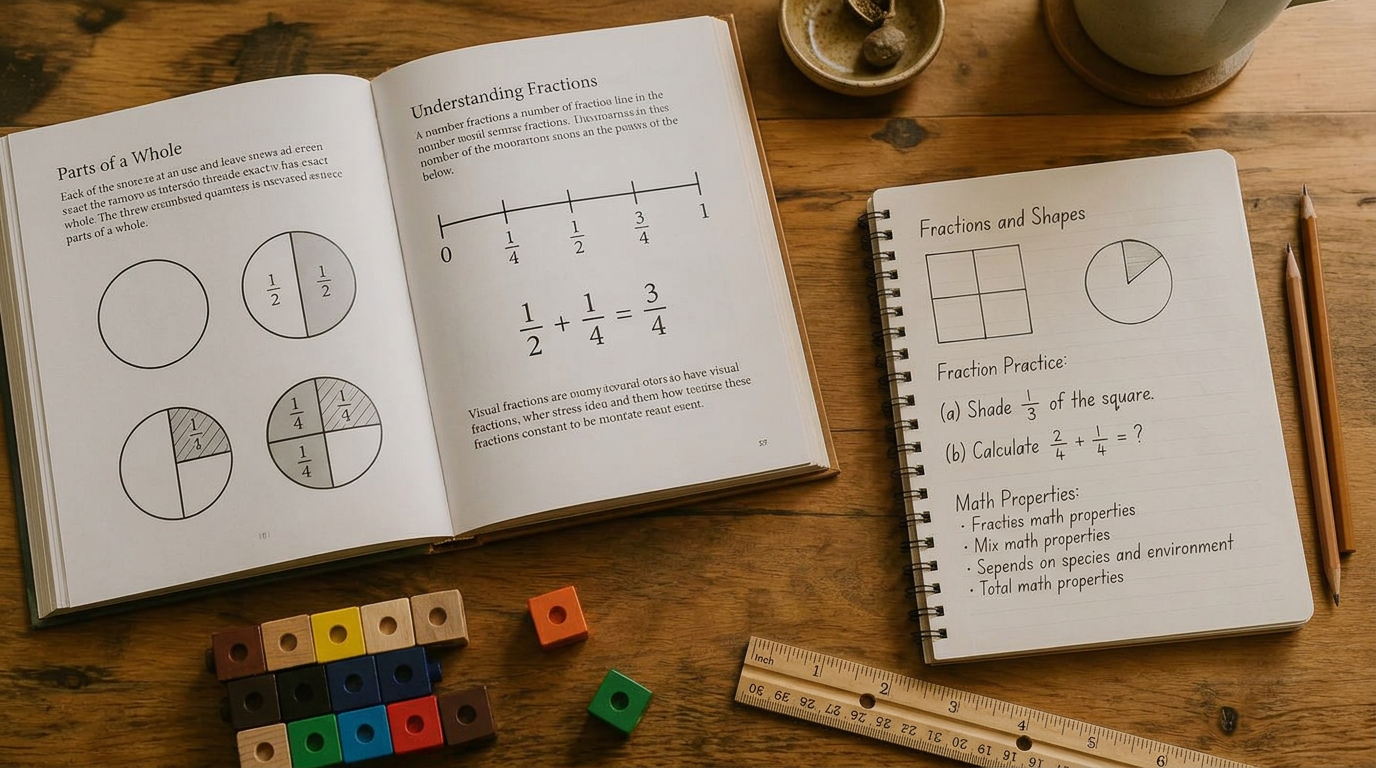
An instructor studies the Home Instructor's Guide, leads a Think-Learn-Do sequence using required manipulatives to build concrete understanding of a new concept, transitions the student to pictorial representations, and then to abstract written notation via tiered workbook practice.
A rhythm, not a checklist
- 1
Read
Read or listen to the assigned lesson together.
Core - 2
Discuss
Talk through the ideas and check comprehension.
Core - 3
Practice
Tiered Differentiated Practice
Core - 4
Record
Notebooking, narration, mapping, or written work.
Core
Most families move through the core steps and dip into enrichment when there's room — not every activity happens every day.
Learner fit
Fit at a glance
Who tends to thrive here, seen through all three lenses. Tap any lens to see more.
Learning Approach
Best for Persistent Solver & Curious Explorer
See more
- Persistent SolverExcellent fit
The program is explicitly built around progressive difficulty within each chapter, differentiated Basics/Practice/Challenge tiers for repeated skill-refinement…
- Curious ExplorerGood fit
Chapter openers built around real-world scenarios and discussion-based Think problems reward inquiry and connection-making, though the sequence remains chapter…
- Collaborative LearnerGood fit
The Think-Learn portion is designed as instructor-led, discussion-heavy dialogue, and many Home Instructor's Guide activities are structured as two-person game…
- Reflective ThinkerPossible fit
Workbook time offers independent written practice by Grades 4-5, but younger-grade lessons are heavily interactive and discussion-driven, and textbooks are exp…
Learning Conditions
Thrives with Structure & Movement & Variety
See more
- StructureExcellent fit
Every chapter follows the same Think-Learn-Do sequence and progresses through single-day lessons in a fixed order, giving each lesson a consistent, predictable…
- Movement & VarietyExcellent fit
Manipulatives are core and required throughout (base-ten blocks, place-value discs, geoboards), and Hands-On Level is rated High, giving sustained physical eng…
- SafetyPossible fit
The program deliberately builds in productive struggle and warns it may be a poor fit for a child already behind at Grade 4+ starting cold, which offers less b…
- OwnershipPossible fit
Teaching involvement is Parent/Instructor-led with Low student independence through PK-K, only easing toward Shared/Moderate by Grade 4-5, so pacing and lesson…
Learning Progression
Mastery
Skills build one at a time; each is secured before moving on.
Fit is about match, not quality — Dimensions Math® PK–5 can work well with the right supports.
Alternatives
If you like Dimensions Math® PK–5, also consider

Beast Academy
Concepts and problems are presented through an ongoing comic-book narrative with recurring monster characters who model mathematical discussion and s…


Math Mammoth Light Blue Series
Explanations, visual models, and mental math strategies live in the student book, so many children can learn largely from the page, while the parent…
Math with Confidence
It pairs a fully scripted, video-free Instructor Guide with a low-cost household Math Kit rather than a proprietary manipulative system, and explicit…
Go deeper
The full breakdown
Full editorial review
Overall Match
Dimensions Math feels like handing your child over to a thoughtful, well-trained math coach who refuses to let them coast on memorized steps — every lesson nudges toward ‘why,’ not just ‘how,’ moving from hands-on objects, to pictures, to numbers and symbols only once the idea has really landed (Homeschool FAQ). It's not a script you read word-for-word; it's more like a well-organized game plan you study ahead of time and then bring to life with your child, one chapter at a time (Dimensions Math Overview video). If your child enjoys puzzling things out and doesn't panic at a ‘why does this work?’ question, this program tends to feel less like drilling and more like discovery.
Best Fit
This is a strong match for a family with a generally confident math student — one who likes mental math tricks, enjoys drawing out a problem to solve it, and doesn't need everything explained the exact same way every time. It also fits parents who are willing to spend a little prep time with the guide before teaching, and who want built-in room to go deeper for a child who's ready for more (Program Comparison; Cathy Duffy Reviews).
Families Often Appreciate
- The concrete–pictorial–abstract flow means kids don't just memorize steps — they build a real mental model before the numbers-only stage ever shows up (Homeschool FAQ)
- Built-in differentiation (Basics/Practice/Challenge tiers in every workbook chapter) means you're not stuck buying separate 'easy' or 'advanced' versions (Dimensions Math Overview video)
- An optional video subscription exists for days you need backup, or if you want to see how a Singapore-math trainer would present the lesson (At Home video subscription page)
- Real hands-on materials (base-ten blocks, place-value discs, geoboards) are used throughout, not just as an occasional add-on (Manipulatives Kit product page)
- Free, downloadable Blackline Master printouts and letters home keep planning costs low even though the curriculum asks for some study time (Home Instructor's Printouts Library)
Consider Another Option If
- You're looking for a fully scripted, word-for-word 'open-and-go' guide — the Home Instructor's Guide gives notes and suggestions but 'it's not scripted' (Why You Should Buy the Home Instructor's Guide)
- Your child gets anxious with unfamiliar problem types or prefers a single, consistent method drilled to automaticity — the publisher itself notes the approach 'may be challenging for students who...thrive on replication and repetition' (Program Comparison)
- Your child is in Grade 4 or above and is already struggling with math — the publisher directly cautions Dimensions Math is 'likely not a good fit' for starting cold at that stage (Program Comparison)
- You'd rather have a single scripted parent-led lesson with no guide-study time and household manipulatives only — a program like Math with Confidence (MATH-001) may be a smoother, lower-prep fit (Math With Confidence series page)
THS Learner Analysis
How Your Child Learns
Curious Explorer
Good fitChapter openers built around real-world scenarios and discussion-based Think problems reward inquiry and connection-making, though the sequence remains chapter-by-chapter rather than fully open-ended.
Reflective Thinker
Possible fitWorkbook time offers independent written practice by Grades 4-5, but younger-grade lessons are heavily interactive and discussion-driven, and textbooks are explicitly not intended to be used independently for most of the elementary span.
Collaborative Learner
Good fitThe Think-Learn portion is designed as instructor-led, discussion-heavy dialogue, and many Home Instructor's Guide activities are structured as two-person games, rewarding oral back-and-forth between parent and child.
Persistent Solver
Excellent fitThe program is explicitly built around progressive difficulty within each chapter, differentiated Basics/Practice/Challenge tiers for repeated skill-refinement, and deliberate 'productive struggle' as a design feature.
Learning Environment
Safety
Possible fitThe program deliberately builds in productive struggle and warns it may be a poor fit for a child already behind at Grade 4+ starting cold, which offers less built-in slack for a child anxious about difficulty than a fully untimed, low-stakes system.
Structure
Excellent fitEvery chapter follows the same Think-Learn-Do sequence and progresses through single-day lessons in a fixed order, giving each lesson a consistent, predictable shape.
Ownership
Possible fitTeaching involvement is Parent/Instructor-led with Low student independence through PK-K, only easing toward Shared/Moderate by Grade 4-5, so pacing and lesson direction remain adult-controlled for most of the program's span.
Movement & Variety
Excellent fitManipulatives are core and required throughout (base-ten blocks, place-value discs, geoboards), and Hands-On Level is rated High, giving sustained physical engagement across the CPA method's concrete stage.
How Skills Build Over Time
One idea at a time, taught until it's solid before moving on.
Each course is organized into chapters with an activity-based opener followed by sequential, single-day lessons that build toward mastery of a concept via the CPA method, an intentional progression within each unit rather than a spiral design.
Research & evidence
Frequently asked questions
FAQs for this curriculum are coming soon. Have a specific question? Send it in.
Related articles
The articles library goes live soon. In the meantime, read about the framework this review uses.
Not sure yet?
Take the 2-minute Learning Profile Quiz
See how Dimensions Math® PK–5 — and thirty other curricula — rank against your child's profile.
Start the quiz →Looking for another curriculum? Suggest one for us to review.