
BJU Press Math
A Christian, concrete-to-abstract math program offering a genuine choice between parent-led and video-led daily instruction, built around spiral review rather than strict topic-by-topic mastery gating.
View course breakdown
- Grade range
- Grades K5–12
- Format
- A K5–12 print math program offered as either a Textbook Kit (parent-taught from a scripted teacher's edition) or a Video Course Kit (recorded teacher leads daily lessons via the Homeschool Hub), combining concrete manipulative-based instruction in the early grades with a spiral-review daily worktext structure.
- What's included
- Student Worktext/Textbook, Teacher's Edition (Textbook Kit) or Homeschool Hub video access (Video Kit), Activity/manipulative sets (K5–Grade 4), Tests booklet, answer keys.
- Consumable
- Varies
- Role
- Core
- Daily time
- 25–45 minutes
Quick decision
In a sentence
Every new concept is explicitly taught first with real objects, then pictorial representations, then abstract numbers, and the program offers a genuine choice between parent-led teaching and a recorded video teacher through the Homeschool Hub.
A great fit if
Children and families who tend to thrive here.
- Families who want a structured, biblically-integrated math program with genuine teacher-led instruction, and children who benefit from seeing concepts demonstrated multiple ways before working independently.
Think twice if
Where it may take more adjusting.
- Families wanting a secular or faith-neutral program, a child ready for fully independent self-teaching, or families wanting a single manipulative system used consistently past Grade 4.
Ready to try it?
Find BJU Press Math on Amazon.
Affiliate Disclosure: This page contains affiliate links. If you purchase through these links, The Thoughtful Homeschool may earn a commission at no additional cost to you. Full disclosure
Parent Experience
What day-to-day actually looks like
How much work this is for you, how independent your child can be, and what a week feels like.

At a glance
Your day with this program
Daily time
25–45 min
Prep
Moderate
Parent at the table
High
Course Structure
—
Prep required
How much do I do before the lesson?
Moderate per source characteristics table.
Parent involvement
How much am I at the table?
Parent-Led (Textbook Kit) or Video-Led (Homeschool Hub Kit), by family choice; either way a teacher actively presents each new concept.
Student independence
How much can my child carry?
Low, rising to Low-Moderate at upper grades; courses are described as dependent on a teacher's presentation.
Daily workload
How much of the day does this take?
Moderate per source characteristics table.
Cognitive demand
How hard is the thinking?
Rated Moderate-High per source.
Hands-on level
How much making and doing?
High in K5–Grade 4 (core manipulatives); Moderate from Grade 5 onward as manipulatives are no longer produced.
Flexibility
Can we bend it to our week?
Moderate per source; choice of Textbook or Video Kit adds delivery flexibility.
Screen time
How much happens on a device?
None for the Textbook Kit; Moderate-High for the Video Course Kit via Homeschool Hub.
A Typical Day
What a lesson feels like
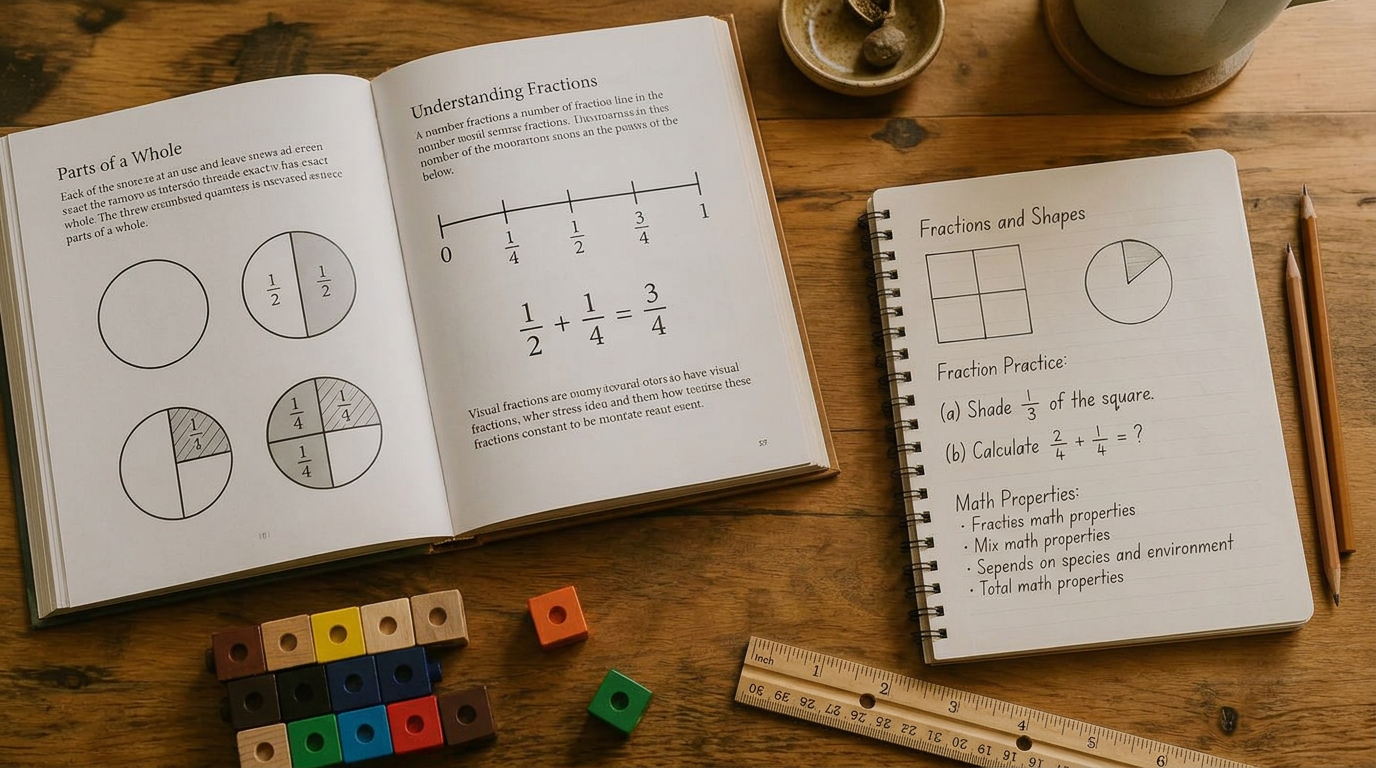
A teacher (parent or recorded video teacher) introduces each new concept through hands-on manipulatives and visuals, walks through guided practice and discussion, and the student then completes independent worktext practice with built-in review of prior concepts before each unit test.
A rhythm, not a checklist
25–45 min a day- 1
Read
Read or listen to the assigned lesson together.
Core - 2
Watch
Video-Taught Option Via Homeschool Hub
Core - 3
Discuss
Turn-And-Talk/Discussion Activities
Core - 4
Practice
Teacher-Led Guided Practice
Core
Most families move through the core steps and dip into enrichment when there's room — not every activity happens every day.
Learner fit
Fit at a glance
Who tends to thrive here, seen through all three lenses. Tap any lens to see more.
Learning Approach
Best for Persistent Solver & Collaborative Learner
See more
- Persistent SolverExcellent fit
The program combines progressive-difficulty concept sequencing with heavy daily and cumulative spiral review and a fixed review-then-test cadence before every…
- Collaborative LearnerGood fit
Lessons make heavy use of teacher-led discussion, role-play, games, and turn-and-talk activities as part of daily concept introduction.
- Curious ExplorerPossible fit
STEM/STEAM lessons and word-problem applications provide some real-world engagement, but the core sequence is scripted and teacher-driven, leaving little room…
- Reflective ThinkerPossible fit
Independent worktext practice exists on the back pages of most lessons, but the majority of new instruction is oral, interactive, and teacher-presented rather…
Learning Conditions
Thrives with Structure & Safety
See more
- StructureExcellent fit
Each lesson follows a consistent teacher-led introduce-practice-review sequence, with review deliberately built in before every unit test.
- SafetyGood fit
The concrete-to-abstract sequence and built-in spiral review before every test give children multiple, low-pressure exposures to a concept before being formall…
- Movement & VarietyGood fit
Manipulative-based, hands-on instruction is core through Grade 4, with Hands-On Level rated High in the early grades before shifting to worktext-based practice…
- OwnershipPossible fit
Courses are described as dependent upon a teacher's presentation of the material rather than designed for independent, self-directed use, limiting how much con…
Learning Progression
Hybrid
Mostly focused on one topic at a time, with short review woven in.
Fit is about match, not quality — BJU Press Math can work well with the right supports.
Alternatives
If you like BJU Press Math, also consider

Beast Academy
More mastery in how skills build, with a more explicitly secular presentation.

Dimensions Math® PK–5
More mastery in how skills build, with a more explicitly secular presentation.

Math Mammoth Light Blue Series
More mastery in how skills build, with a more explicitly secular presentation.
Math with Confidence
More mastery in how skills build, with a more explicitly secular presentation.
Go deeper
The full breakdown
Full editorial review
Overall Match
BJU Press Math feels like the well-organized classroom teacher who shows up with a lesson plan, a script, and a folder of manipulatives every single day — a courses described as heavily dependent on a teacher's presentation rather than an independent workbook program (Cathy Duffy Reviews). Every new idea gets introduced hands-on, walked through with visuals, and then practiced symbolically on the page — and the publisher is upfront that its spiral-review design means your child won't need a perfect score before moving forward, since concepts return again and again across the year (Elementary Math; Mastery vs Spiral Review blog). You can teach it yourself from the script, or hand daily teaching over to a recorded teacher through the Homeschool Hub video option (Kits page).
Best Fit
BJU Press Math is a good match for families who want a structured, biblically-integrated math program with a genuine teaching sequence rather than a workbook their child completes alone. It suits children who benefit from seeing a concept demonstrated multiple ways — with objects, then pictures, then numbers — and who do well with frequent, predictable review before tests (Cathy Duffy Reviews; Elementary Math).
Families Often Appreciate
- A concrete-to-abstract teaching sequence, moving from objects to pictures to numbers for every new concept (Elementary Math)
- A biblical worldview woven directly into lesson objectives from Math 2 onward, not just added as a devotional aside (Cathy Duffy Reviews)
- The choice between teaching it yourself or letting a recorded teacher lead daily lessons through the Homeschool Hub (Kits page)
- Review deliberately built in before each test, so children aren't caught off guard by material they haven't touched in a while (BJU Press article)
- Free placement tests for grades 3–5 to help confirm the right starting level (BJU Press blog)
Consider Another Option If
- You want a secular or faith-neutral math program — biblical content is woven into the lesson objectives themselves, not an optional add-on (Elementary Math)
- You want a program your child can pick up and work through independently — BJU Press courses are described as dependent upon a teacher's presentation of the material, rather than designed for hand-it-and-step-back use (Cathy Duffy Reviews)
- You want one universal manipulative system that carries through every grade — manipulatives are grade-specific and are not produced past Grade 4 (Elementary Math)
- You want the lightest possible daily time commitment — published homeschool schedules allocate a substantial block of time to math specifically each day (BJU Press blog)
THS Learner Analysis
How Your Child Learns
Curious Explorer
Possible fitSTEM/STEAM lessons and word-problem applications provide some real-world engagement, but the core sequence is scripted and teacher-driven, leaving little room for child-directed inquiry.
Reflective Thinker
Possible fitIndependent worktext practice exists on the back pages of most lessons, but the majority of new instruction is oral, interactive, and teacher-presented rather than designed for independent reading and discovery.
Collaborative Learner
Good fitLessons make heavy use of teacher-led discussion, role-play, games, and turn-and-talk activities as part of daily concept introduction.
Persistent Solver
Excellent fitThe program combines progressive-difficulty concept sequencing with heavy daily and cumulative spiral review and a fixed review-then-test cadence before every unit assessment.
Learning Environment
Safety
Good fitThe concrete-to-abstract sequence and built-in spiral review before every test give children multiple, low-pressure exposures to a concept before being formally assessed on it.
Structure
Excellent fitEach lesson follows a consistent teacher-led introduce-practice-review sequence, with review deliberately built in before every unit test.
Ownership
Possible fitCourses are described as dependent upon a teacher's presentation of the material rather than designed for independent, self-directed use, limiting how much control the student has over pacing or approach.
Movement & Variety
Good fitManipulative-based, hands-on instruction is core through Grade 4, with Hands-On Level rated High in the early grades before shifting to worktext-based practice at Grade 5 and beyond.
How Skills Build Over Time
Focused work on new ideas, with earlier topics woven into review.
The publisher's own materials describe the program as mastery-oriented and one-concept-at-a-time, but layered with substantial spiral review, explicitly stating that mastery and spiral review 'aren't mutually exclusive.'
Research & evidence
Frequently asked questions
FAQs for this curriculum are coming soon. Have a specific question? Send it in.
Related articles
The articles library goes live soon. In the meantime, read about the framework this review uses.
Not sure yet?
Take the 2-minute Learning Profile Quiz
See how BJU Press Math — and thirty other curricula — rank against your child's profile.
Start the quiz →Looking for another curriculum? Suggest one for us to review.