

The Good and the Beautiful Math
A visually engaging, low-prep, spiral-review Christian math curriculum for K–8 that shifts from parent-led early lessons to independent, video-supported learning from Math 4 onward.
View course breakdown
- Grade range
- Math K–Pre-Algebra | Math 8
- Format
- A K–8 print math curriculum (also available as free downloadable PDFs) with illustrated, storybook-style lessons and simple wood-based manipulatives in the early grades, shifting to themed video-led instruction from Math 4 onward; no high-school levels currently offered.
- What's included
- Course Book (print or free PDF), wood-based Math Box manipulative set (Math K–3), optional themed video lessons (Math 4 and up), answer keys.
- Consumable
- Yes
- Role
- Core
- Daily time
- 10–60 minutes
Quick decision
In a sentence
Lessons are deliberately varied page-to-page, cross-linking math with geography, nature study, and storytelling so that 'no two pages look alike,' and the program explicitly identifies itself as a spiral rather than advanced curriculum.
A great fit if
Children and families who tend to thrive here.
- Families wanting a gentle, low-prep, visually engaging math curriculum for the early years, and children who enjoy varied, cross-disciplinary lessons.
Think twice if
Where it may take more adjusting.
- Families seeking an advanced or accelerated math track, a program with more substantial Christian content, or maximum depth of conceptual number-sense development.
Parent Experience
What day-to-day actually looks like
How much work this is for you, how independent your child can be, and what a week feels like.
At a glance
Your day with this program
Daily time
10–60 min
Prep
Low
Parent at the table
Moderate
Course Structure
—
Prep required
How much do I do before the lesson?
Minimal — parents do not need to read lessons ahead of time before teaching them.
Parent involvement
How much am I at the table?
High (Math K-3, parent-led lessons) transitioning to Low/Supportive from Math 4 onward.
Student independence
How much can my child carry?
Low in Math K-3, rising to High from Math 4 onward with video or written mini-lessons.
Daily workload
How much of the day does this take?
Light in Math K-3 (10-35 min), rising to Moderate-Substantial by Math 6-Pre-Algebra (45-60 min).
Cognitive demand
How hard is the thinking?
Rated Moderate per source; not considered an advanced curriculum by the publisher.
Hands-on level
How much making and doing?
High in Math K-3 (wood-based Math Box manipulatives); Low from Math 4 onward.
Flexibility
Can we bend it to our week?
Moderate per source; free PDF option adds accessibility/flexibility.
Screen time
How much happens on a device?
None in Math K-3; Moderate from Math 4 onward once themed video lessons carry most of the teaching.
A Typical Day
What a lesson feels like
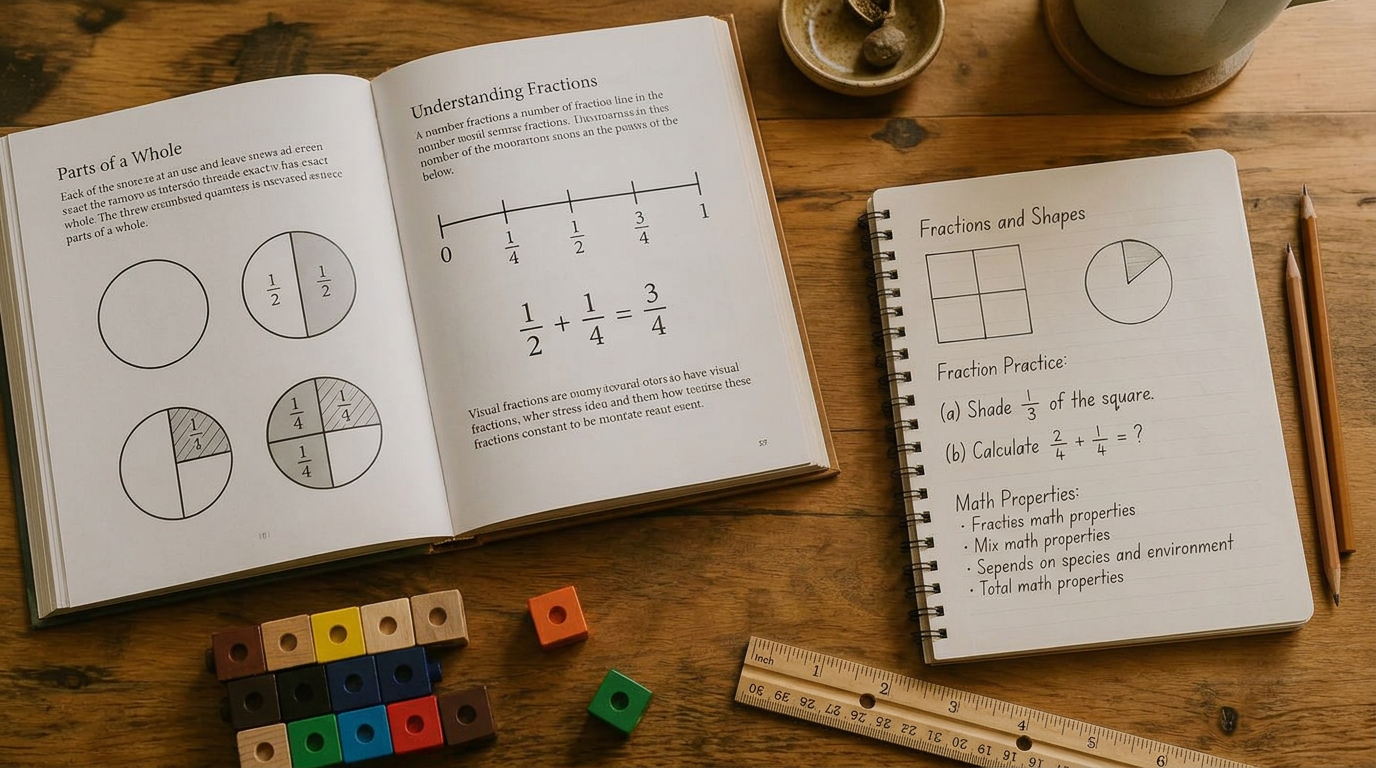
In Math K–3, a parent leads short, illustrated lessons using wood-based manipulatives; from Math 4 onward, the student watches a themed video lesson or reads a written mini-lesson and completes practice pages largely independently, with topics spiraling back for review throughout the year.
A rhythm, not a checklist
10–60 min a day- 1
Read
Illustrated Storybook-Style Lessons
Core - 2
Watch
Themed Video Instruction (Math 4+)
Core - 3
Discuss
Talk through the ideas and check comprehension.
Core - 4
Practice
Spiral Review
Core
Most families move through the core steps and dip into enrichment when there's room — not every activity happens every day.
Learner fit
Fit at a glance
Who tends to thrive here, seen through all three lenses. Tap any lens to see more.
Learning Approach
Best for Curious Explorer & Reflective Thinker
See more
- Curious ExplorerExcellent fit
Lessons deliberately cross-link math with geography, nature study, and storytelling so that 'no two pages look alike,' rewarding curiosity beyond routine compu…
- Reflective ThinkerGood fit
From Math 4 onward, the student works largely independently through a written mini-lesson or video lesson and practice pages, though K-3 remains parent-led.
- Collaborative LearnerGood fit
Math K-3 lessons are parent-led with shared games and stories, though this collaborative dynamic drops sharply once instruction shifts to independent video-led…
- Persistent SolverPossible fit
Spiral review is present, but an independent head-to-head comparison found the program doesn't go nearly as deeply into concepts as more rigor-focused alternat…
Learning Conditions
Thrives with Structure & Safety
See more
- StructureExcellent fit
Lessons follow a consistent daily format and a defined 120-lesson-per-level sequence, though the spiral (rather than strictly sequential mastery) design allows…
- SafetyGood fit
Low prep requirements, gentle illustrated lessons, and spiral review that revisits material repeatedly rather than gating advancement on a single test create a…
- OwnershipGood fit
Student independence shifts from Low in Math K-3 to High from Math 4 onward, as the student takes over most of the lesson via video or written mini-lesson with…
- Movement & VarietyPossible fit
Hands-on wood-based Math Box manipulatives are used in Math K-3, but Hands-On Level drops from High to Low from Math 4 onward as the program shifts to video an…
Learning Progression
Spiral
Topics return throughout the year, building a little more each time.
Fit is about match, not quality — The Good and the Beautiful Math can work well with the right supports.
Alternatives
If you like The Good and the Beautiful Math, also consider

Beast Academy
More mastery in how skills build, with a more explicitly secular presentation.
Dimensions Math® PK–5
More mastery in how skills build, with a more explicitly secular presentation.

Math Mammoth Light Blue Series
More mastery in how skills build, with a more explicitly secular presentation.
Go deeper
The full breakdown
Full editorial review
Overall Match
The Good and the Beautiful Math (currently branded Simply Good and Beautiful Math) pairs illustrated, storybook-style lessons with math practice, cross-linking topics like geography and nature study into the page design so 'no two pages look alike' (Math collection page; Rigorous homeschool math blog). In the early grades a parent leads each lesson using simple wood-based manipulatives, but from Math 4 onward the program hands most of the teaching over to themed video lessons, shifting the student toward independent work (Math 4 FAQs). The publisher is upfront that this is primarily a spiral-review program rather than an advanced or accelerated one (Placement page; Cathy Duffy Reviews).
Best Fit
This program suits families who want a gentle, low-prep, visually engaging math curriculum for the early years, and who are comfortable handing daily teaching over to video lessons once a child reaches Math 4. It's a good fit for children who enjoy varied, cross-disciplinary lessons more than a straightforward workbook.
Families Often Appreciate
- Free downloadable PDF curriculum for the full K–8 sequence, at no cost (Free Homeschool Math Curriculum)
- No lesson prep required — parents don't need to read ahead before teaching (Math FAQs)
- Themed video lessons that carry most of the teaching load from Math 4 onward (Math 4 FAQs)
- Simple wood-based Math Box manipulatives for the early grades (Math FAQs)
- A shorter course — only 120 lessons per level, compared to some other programs (Comparison video)
- Full-color, storybook-style illustrations throughout (Cathy Duffy Reviews)
Consider Another Option If
- You're looking for an advanced or accelerated math track — the publisher explicitly states this is not considered an advanced curriculum (Placement page)
- You want a program with more Christian content woven throughout — an independent review found the Christian content specifically in the math courses to be very minimal (Cathy Duffy Reviews)
- You want a true mastery-gated program rather than spiral review — the curriculum is mainly a spiral program, revisiting topics repeatedly rather than requiring mastery before moving on (Math FAQs)
- You want the parent to remain the primary teacher at every grade — video lessons become the main teaching method from Math 4 onward (Math 4 FAQs)
- You want the deepest possible number-sense development — a head-to-head comparison found it doesn't go nearly as deeply into concepts as Math with Confidence (Comparison video)
THS Learner Analysis
How Your Child Learns
Curious Explorer
Excellent fitLessons deliberately cross-link math with geography, nature study, and storytelling so that 'no two pages look alike,' rewarding curiosity beyond routine computation.
Reflective Thinker
Good fitFrom Math 4 onward, the student works largely independently through a written mini-lesson or video lesson and practice pages, though K-3 remains parent-led.
Collaborative Learner
Good fitMath K-3 lessons are parent-led with shared games and stories, though this collaborative dynamic drops sharply once instruction shifts to independent video-led work at Math 4.
Persistent Solver
Possible fitSpiral review is present, but an independent head-to-head comparison found the program doesn't go nearly as deeply into concepts as more rigor-focused alternatives, and the publisher itself states it is not considered an advanced curriculum.
Learning Environment
Safety
Good fitLow prep requirements, gentle illustrated lessons, and spiral review that revisits material repeatedly rather than gating advancement on a single test create a lower-pressure learning environment.
Structure
Excellent fitLessons follow a consistent daily format and a defined 120-lesson-per-level sequence, though the spiral (rather than strictly sequential mastery) design allows a looser structure than programs with rigid mastery gates.
Ownership
Good fitStudent independence shifts from Low in Math K-3 to High from Math 4 onward, as the student takes over most of the lesson via video or written mini-lesson with less parent direction.
Movement & Variety
Possible fitHands-on wood-based Math Box manipulatives are used in Math K-3, but Hands-On Level drops from High to Low from Math 4 onward as the program shifts to video and written independent work.
How Skills Build Over Time
Concepts return in short cycles, deepening a little each time.
The publisher explicitly identifies the program as mainly a spiral math curriculum on its own placement guidance, and independent review corroborates that it does not go as deeply into concepts as more advanced-focused alternatives.
Research & evidence
Frequently asked questions
FAQs for this curriculum are coming soon. Have a specific question? Send it in.
Related articles
The articles library goes live soon. In the meantime, read about the framework this review uses.
Not sure yet?
Take the 2-minute Learning Profile Quiz
See how The Good and the Beautiful Math — and thirty other curricula — rank against your child's profile.
Start the quiz →Looking for another curriculum? Suggest one for us to review.