
Learning Condition
Structure
Structure describes how predictable and pre-planned your child needs the day to be. Some children lean into a steady rhythm; others feel boxed in by it. Neither is right or wrong — it's about knowing what helps your child feel oriented and ready to work.
Know what to expect.
How this condition shapes learning
Getting started
Notices when the routine changes, and may prefer (or resist) knowing what's next before starting. Behavior often shifts when the day feels chaotic — or too rigid.
What builds confidence
With the right level of structure, transitions become easier and independent work flows more smoothly. Predictable rhythms free up attention for the actual learning.
What may create friction
Too much structure can feel confining to some learners, while too little can leave others anxious and drifting. The right amount often shifts with age and season.
Ways to support structure
Small, practical shifts for everyday lessons.
- 1
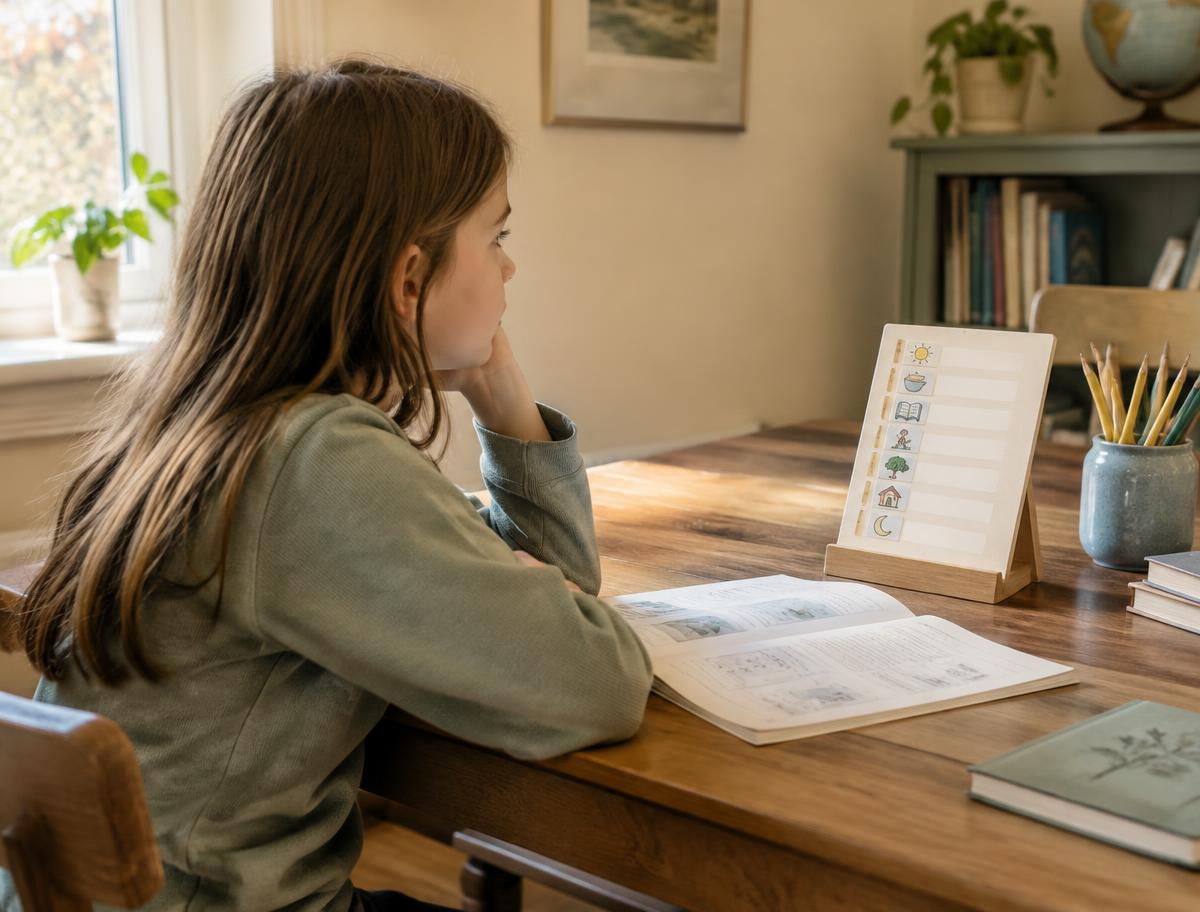
Post a simple visual schedule
Keep it at your child's eye level so the shape of the day is always visible.
Try: A short picture or word list: breakfast, math, reading, outside time.
- 2
Name the day's shape out loud
A quick verbal preview before starting helps a structure-loving child settle in.
- 3
Adjust the dial slowly
Structure is rarely a hard switch — loosen or tighten it a little at a time and watch what happens.
Curriculum features to look for
Helpful signals, not requirements. How you use a curriculum can matter as much as the materials themselves.
- Clear scope-and-sequence with defined daily lessons
- A predictable lesson format the child can rely on
- Or, in the other direction, flexible pacing with open weeks
- Routines and rhythms built into the program itself
A gentle reminder
Structure isn't about rigidity. It's about giving your child enough predictability to relax into the work.
A child who thrives on structure isn't inflexible, and a child who resists it isn't disorganized. The goal is simply the right amount of shape — enough to feel steady, not so much that it squeezes out curiosity.
Explore what fits
Other conditions