
Learning Condition
Movement & Variety
Some children can settle into a chair and stay there. Others need to move, switch, and shift to stay engaged. Movement & Variety describes how much physical and format change your child needs within a lesson.
Mind and body engaged.
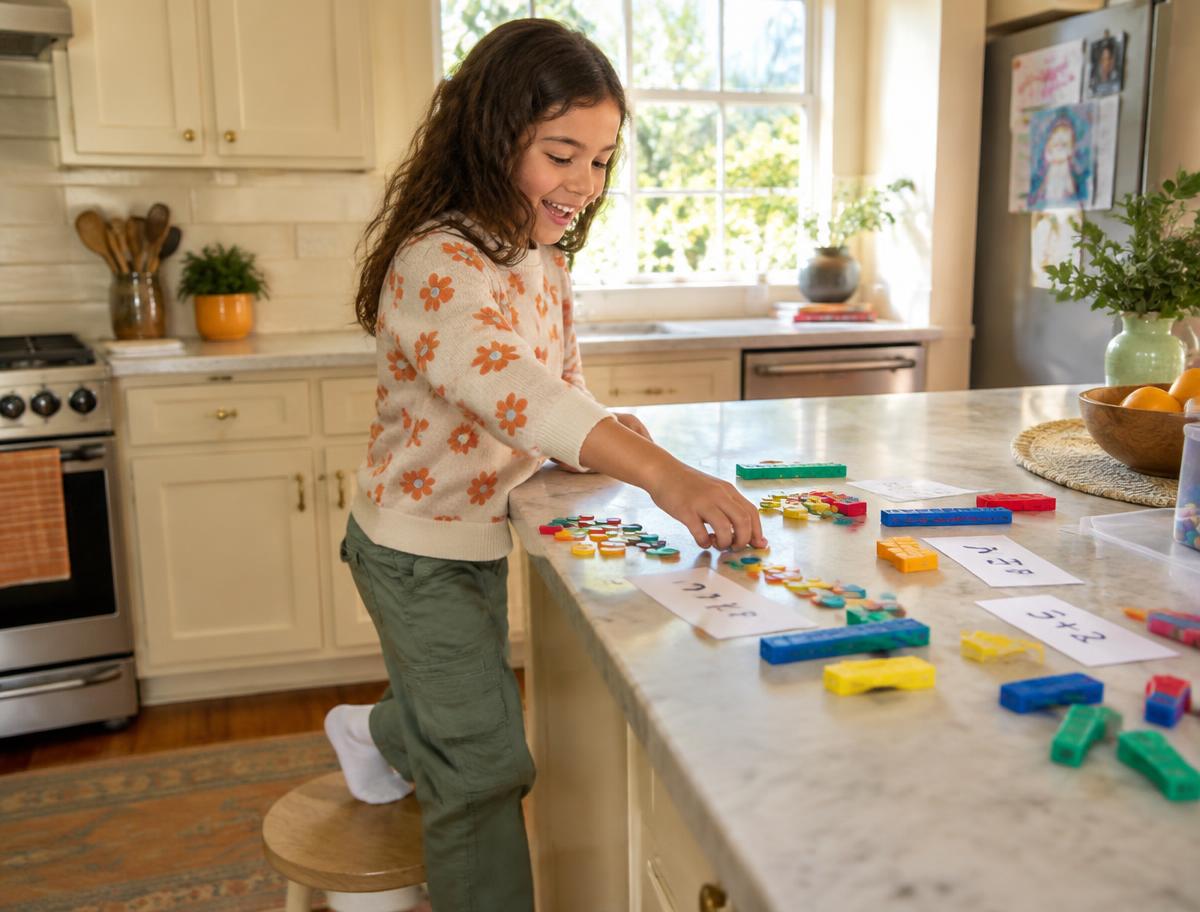
How this condition shapes learning
Getting started
May fidget, stand, or pace while concentrating, and can fade quickly in long single-format sessions. Often re-engages right after a physical or format shift.
What builds engagement
Full-body engagement often means deeper retention. These learners adapt well to hands-on, tactile work and can bring energy back to a stalled lesson quickly.
What may create friction
Can look 'off-task' when actually processing, and struggles with all-worksheet or all-reading days. May simply need explicit permission to move.
Ways to support movement & variety
Small, practical shifts for everyday lessons.
- 1
Break lessons into short blocks
Brief segments with a physical reset between them keep energy and attention steady.
Try: Ten minutes of math, a quick stretch or chore, then reading.
- 2
Rotate the formats
Move between read, do, discuss, and build so no single mode wears out its welcome.
- 3
Allow non-disruptive movement
Standing, fidgets, or walk-and-recite can be part of learning rather than a break from it.
Curriculum features to look for
Helpful signals, not requirements. How you use a curriculum can matter as much as the materials themselves.
- Multi-modal lessons: manipulatives, discussion, writing, movement
- Short lesson blocks rather than long single tasks
- Hands-on components alongside written work
- Built-in variety in how each day unfolds
A gentle reminder
Needing movement isn't a discipline problem. For many children, the body moving is what lets the mind settle.
A child who needs variety isn't unfocused, and a child who sits still isn't necessarily more engaged. Watch for when real understanding happens — it may be while pacing the kitchen floor.
Explore what fits
Other conditions