The Good and the Beautiful Language Arts
An excellent all-in-one choice for families wanting a low-prep, literature-rich language arts course with integrated art and geography and a general Christian worldview, gently transitioning a child toward independent work by Level 4.
View course breakdown
- Grade range
- Preschool – High School 3 (roughly ages 3–18)
- Format
- An all-in-one, full-color course book combining reading, writing, grammar, spelling, literature, geography, and art appreciation, moving from parent-scripted instruction to student independence by Level 4.
- Course Structure
- Literature-based
- What's included
- Single full-color Course Book (combined teacher guide and student workbook) per level; dedicated readers/personal readers; Reading Booster Cards/letter tiles at early levels; Grammar & Geography Cards (Levels 5-7); optional Spelling & Writing Workshop book at some levels; free downloadable placement tests.
- Consumable
- Yes
- Role
- Core
- Daily time
- 15–45 minutes
Quick decision
In a sentence
It combines seven subject strands (reading, writing, grammar, spelling, literature, geography, and art appreciation) into a single open-and-go course book with a spiral review structure and a scripted teacher/child font distinction, rather than dedicated sequential phonics or grammar programs.
A great fit if
Children and families who tend to thrive here.
- Families who want one all-in-one book covering reading, writing, grammar, spelling, and literature without juggling five curricula, who value beautiful literature and art, and who want a general Christian worldview woven into daily lessons.
Think twice if
Where it may take more adjusting.
- Families needing strictly secular material, intensive/systematic phonics support, freedom to choose their own reading list instead of a fixed publisher-selected list, or built-in digital progress tracking.
Parent Experience
What day-to-day actually looks like
How much work this is for you, how independent your child can be, and what a week feels like.
At a glance
Your day with this program
Daily time
15–45 min
Prep
Low
Parent at the table
High
Course Structure
Literature-based
Prep required
How much do I do before the lesson?
Open-and-go scripted lessons; ~5-10 minutes of parent involvement per day at Level 4+.
Parent involvement
How much am I at the table?
High for Preschool–Level 3, decreasing to Low/Supportive by Level 4 and up.
Student independence
How much can my child carry?
Low for Preschool–3, rising to High from Level 4 onward.
Daily workload
How much of the day does this take?
Approx. 15-30 minutes (Preschool-3); approx. 30-45 minutes (Levels 4-8); varies by unit at High School.
Cognitive demand
How hard is the thinking?
Challenging enough to stretch without overwhelming.
Hands-on level
How much making and doing?
High at early levels (manipulatives, cut-and-paste pages), moderating at upper levels.
Flexibility
Can we bend it to our week?
Some room to adjust pace or skip sections.
Screen time
How much happens on a device?
Supplemental phonics/teaching videos in the Homeschool app and at upper levels; not required for core instruction.
A Typical Day
What a lesson feels like
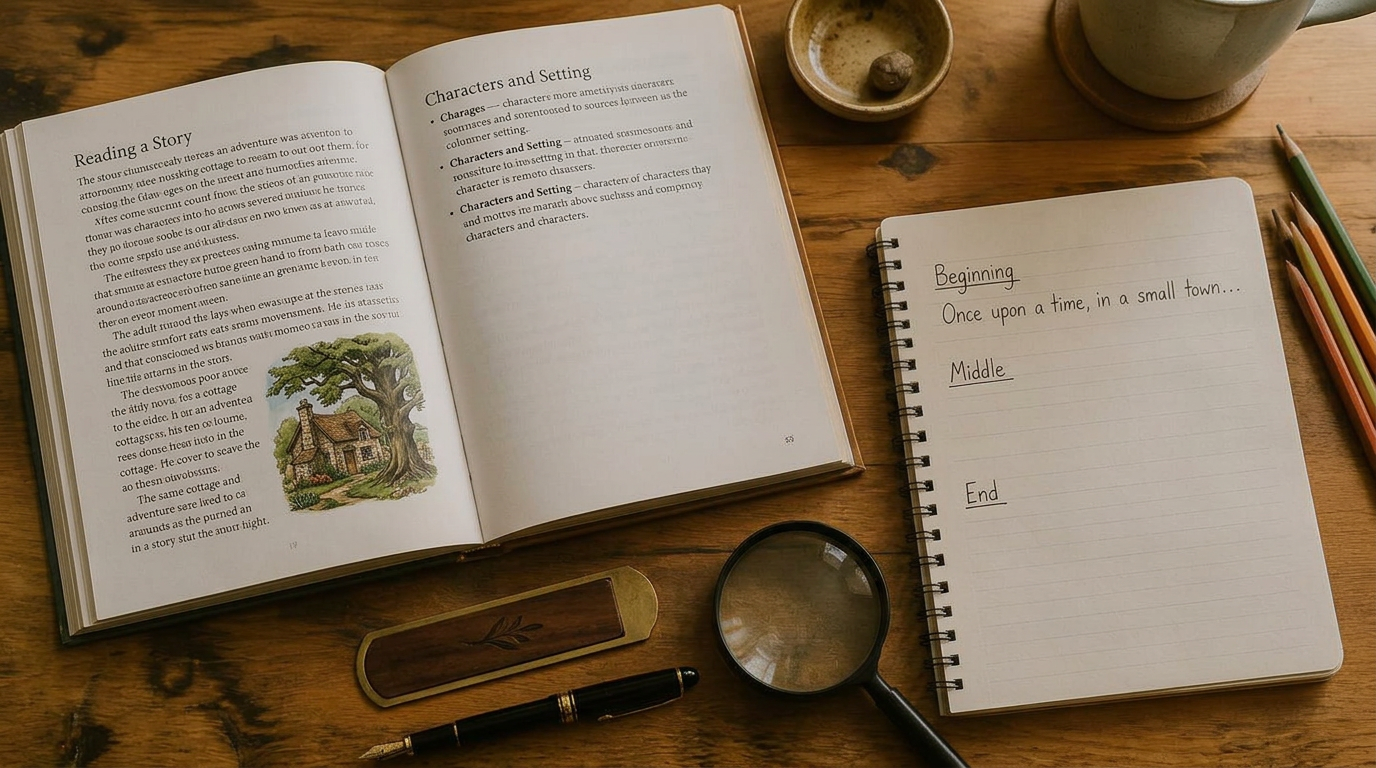
A parent reads scripted instructions and text aloud at the youngest levels (blue font for teacher instructions, black font for child-facing text), leading hands-on phonics practice, dictation, and copywork; as the student advances, independent reading, written narration, and self-checking against answer keys take over, with the parent transitioning to a supportive role by Level 4.
A rhythm, not a checklist
15–45 min a day- 1
Read
Independent Leveled Reading
Core - 2
Watch
Art Appreciation Segments
Core - 3
Record
Dictation And Copywork
Core - 4
Explore
Hands-On Cut-And-Paste Activities
Core
Most families move through the core steps and dip into enrichment when there's room — not every activity happens every day.
Learner fit
Fit at a glance
Who tends to thrive here, seen through all three lenses. Tap any lens to see more.
Learning Approach
Best for Curious Explorer & Reflective Thinker
See more
- Curious ExplorerExcellent fit
The course is built around rich literature, cross-disciplinary integration (reading, writing, grammar, geography, and art appreciation in one lesson), and expo…
- Reflective ThinkerGood fit
Independent reading, personal readers, written narration, and upper-level essay/research writing support quiet, reading-heavy independent work, though Levels K…
- Collaborative LearnerGood fit
Early levels are heavily parent-child interactive through scripted read-aloud dialogue, shared card drills, and discussion of literature and art, though this i…
- Persistent SolverPossible fit
Phonics/grammar instruction is present but explicitly not structured or sequential the way skill-drill programs are, with spiral review prioritized over progre…
Learning Conditions
Thrives with Safety & Structure
See more
- SafetyExcellent fit
The scripted, gentle, low-prep course design and gradual, unhurried handoff from parent-led instruction to independence prioritize a warm, predictable teaching…
- StructureExcellent fit
A single scripted course book with a consistent teacher/child font distinction and a spiral review structure gives every lesson the same predictable daily shap…
- Movement & VarietyGood fit
Early levels include hands-on cut-and-paste activities, tracing, word-sorting, and card drills alongside reading and art appreciation, though hands-on engageme…
- OwnershipPossible fit
Lessons follow a fixed, publisher-scripted sequence and a set literature list chosen by the publisher rather than the family, so while independence grows by Le…
Learning Progression
Spiral
Topics return throughout the year, building a little more each time.
Fit is about match, not quality — The Good and the Beautiful Language Arts can work well with the right supports.
Alternatives
If you like The Good and the Beautiful Language Arts, also consider


Christian Light Education Language Arts
It deliberately splits each grade into ten separate small consumable LightUnits rather than one year-long textbook, specifically so a student experie…
Go deeper
The full breakdown
Full editorial review
Overall Match
If you'd love one gorgeous, all-in-one book that covers reading, writing, grammar, spelling, and literature — without juggling five different curricula — this one is worth a close look (Language Arts collection). It's low-prep for you, rich with real literature and beautiful art for your child, and it weaves in gentle character lessons and a general Christian worldview throughout (HomeschoolPicks review).
Best Fit
Great for kids who love a good story and enjoy learning several subjects woven together rather than kept in separate boxes. Younger learners get lots of hands-on parent support; by Level 4, most kids are working through it largely on their own (Language Arts FAQs; Placement page).
Families Often Appreciate
- One course book instead of five separate subjects to buy, plan, and keep track of (Language Arts collection)
- Free downloadable PDFs for every level, K–8, so you can try it before buying anything (Free Homeschool Language Arts Resources)
- Beautiful literature and full-color art pulled from museums around the world (HomeschoolPicks review)
- Almost no daily prep — just open the book and go (Language Arts collection)
- A clear, gentle path toward your child working independently by Level 4 (Language Arts FAQs)
Consider Another Option If
- You need strictly secular material — this course carries a Christian worldview throughout (Level 4 product page)
- Your child needs intensive phonics support — phonics here is more of a gentle, ongoing thread than a dedicated program like Logic of English or All About Reading (Cathy Duffy — Levels 6 and 7; HomeschoolPicks review)
- You'd rather choose your own books than follow a set reading list (HomeschoolPicks review)
- You want built-in digital progress tracking — this is a print-first program with no online grading (HomeschoolPicks review)
THS Learner Analysis
How Your Child Learns
Curious Explorer
Excellent fitThe course is built around rich literature, cross-disciplinary integration (reading, writing, grammar, geography, and art appreciation in one lesson), and exposure to classic art and nature study.
Reflective Thinker
Good fitIndependent reading, personal readers, written narration, and upper-level essay/research writing support quiet, reading-heavy independent work, though Levels K–3 lean on copywork and dictation more than original written reflection.
Collaborative Learner
Good fitEarly levels are heavily parent-child interactive through scripted read-aloud dialogue, shared card drills, and discussion of literature and art, though this interaction decreases sharply after Level 4.
Persistent Solver
Possible fitPhonics/grammar instruction is present but explicitly not structured or sequential the way skill-drill programs are, with spiral review prioritized over progressive-difficulty mastery.
Learning Environment
Safety
Excellent fitThe scripted, gentle, low-prep course design and gradual, unhurried handoff from parent-led instruction to independence prioritize a warm, predictable teaching relationship over drill or timed pressure.
Structure
Excellent fitA single scripted course book with a consistent teacher/child font distinction and a spiral review structure gives every lesson the same predictable daily shape across all levels.
Ownership
Possible fitLessons follow a fixed, publisher-scripted sequence and a set literature list chosen by the publisher rather than the family, so while independence grows by Level 4, pacing and content choices remain largely externally set throughout.
Movement & Variety
Good fitEarly levels include hands-on cut-and-paste activities, tracing, word-sorting, and card drills alongside reading and art appreciation, though hands-on engagement is described as tapering to moderate at upper levels.
How Skills Build Over Time
Concepts return in short cycles, deepening a little each time.
Concepts in spelling and grammar are reintroduced and reviewed multiple times across levels via a spiral review structure layered on top of the literature core, rather than mastered once and dropped; the phonics/grammar strand is explicitly described as 'not structured, sequential' the way dedicated skills programs are.
Research & evidence
Frequently asked questions
FAQs for this curriculum are coming soon. Have a specific question? Send it in.
Related articles
The articles library goes live soon. In the meantime, read about the framework this review uses.
Not sure yet?
Take the 2-minute Learning Profile Quiz
See how The Good and the Beautiful Language Arts — and thirty other curricula — rank against your child's profile.
Start the quiz →Looking for another curriculum? Suggest one for us to review.