
Learning Approach
The Curious Explorer
“What happens if…?”
Curious Explorers love asking questions, making connections, and discovering how things work. Give them a new idea and they reach for the next question — why, what if, how come.
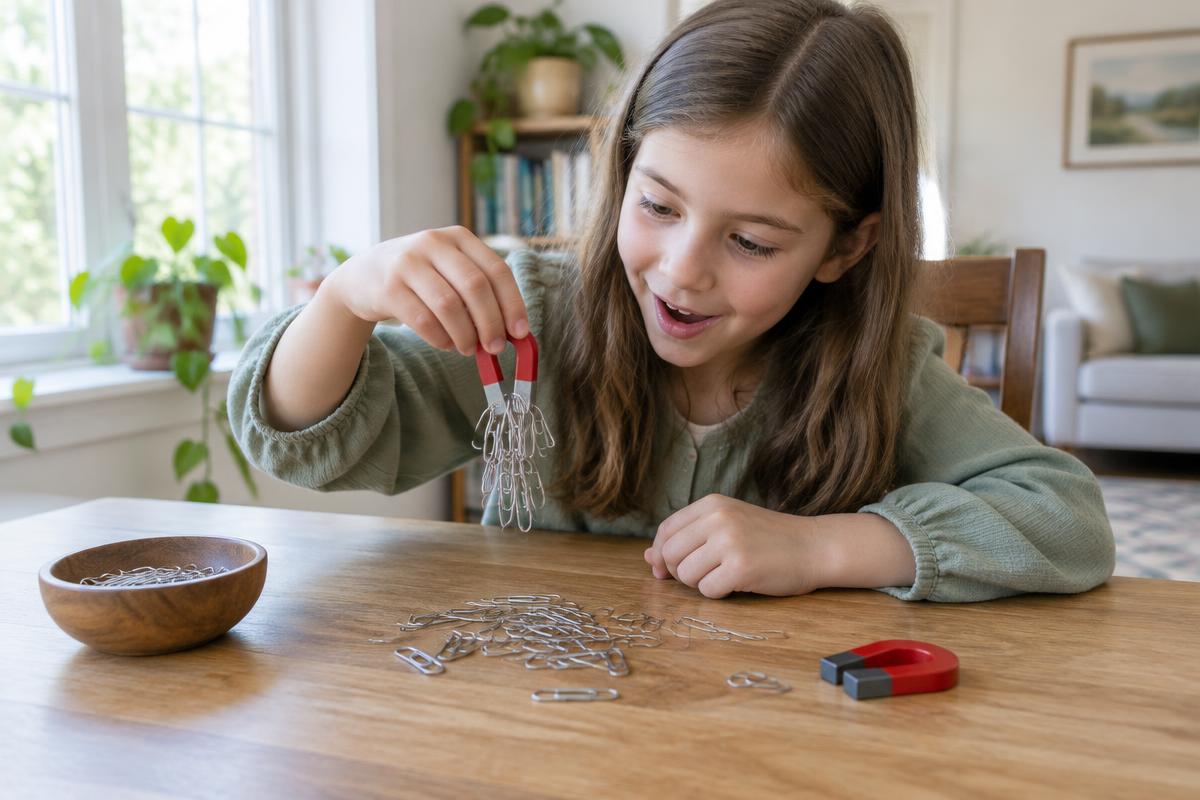
Recognizing this learner
- 1
How they begin
With a question. They want to experiment, poke at an idea, or follow whatever caught their attention.
- 2
What builds momentum
Real examples, stories, and open-ended prompts. Learning sticks when it's tied to something they wondered about.
- 3
What may create friction
Repetitive practice that feels like busywork, or a schedule so rigid there's no room to wonder.
Helpful supports
Small, practical shifts you can try this week.
Start with a question
Frame the lesson around something to figure out rather than a page to finish.
Try: “Why do you think fractions need a common denominator?” before the worksheet.
Offer small extensions
Short mini-projects and “go find out” moments turn curiosity into learning.
Protect a rabbit-trail window
A little time each week for a child-chosen topic keeps the core lessons from feeling like a fence.
Curriculum features to look for
Helpful signals, not requirements. A program doesn't need every one to work well for your child.
- Discovery-oriented or literature-based lessons
- Room for tangents, extensions, and open questions
- Concept-first explanations before drill
- Discussion prompts and real-world examples